Last verified: March 2026
Two Movements, One Fight
In most cities, the history of cannabis legalization and the history of LGBTQ+ rights are separate stories that occasionally intersect. In San Francisco, they are the same story. Not parallel. Not adjacent. Inseparable.
The man who wrote the first medical cannabis law in America was gay. His closest political ally was the first openly gay elected official in California. The dispensary that became the model for every dispensary in the country was born from the AIDS crisis. The grandmother who baked 600 brownies a day baked them for dying gay men. The voters who passed Proposition W were mobilized by the gay rights movement. The board that made cannabis enforcement the lowest priority did so because of AIDS testimony.
You cannot tell the story of legal cannabis without telling the story of San Francisco's LGBTQ+ community. They are one story.
The entire medical cannabis movement owes a direct debt to the gay community.
Steve DeAngelo, cannabis industry pioneer
Dennis Peron: The Castro, Vietnam, and Cannabis
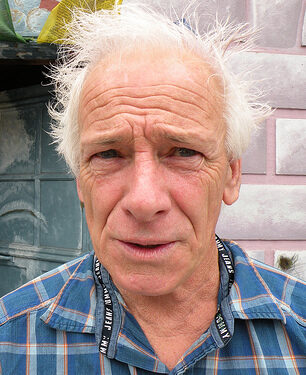
Dennis Peron was a gay man, a Vietnam veteran, and the person most responsible for medical cannabis becoming legal in the United States. These identities were not separate — they were braided together, and each one shaped his path to Proposition 215.
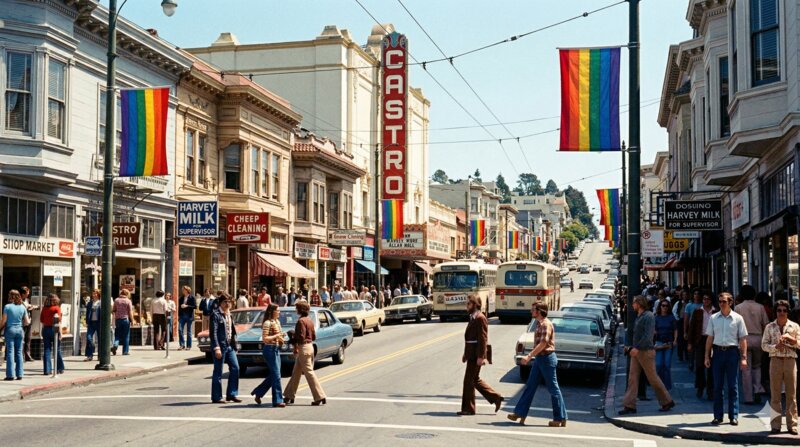
Peron discovered cannabis in Vietnam, where he smuggled it home in his duffel bag. He settled in the Castro and in 1974 opened "Big Top" at 715 Castro Street — three stories of open cannabis sales in the heart of the gayest neighborhood in America. It operated for three years until a 1977 police raid in which an officer shot Peron and another reportedly wished he had killed him, calling him "one less faggot."
Peron survived. And he stayed in the Castro. The raid did not push him out — it deepened his conviction that cannabis prohibition and anti-gay violence were expressions of the same injustice.
Harvey Milk and Proposition W
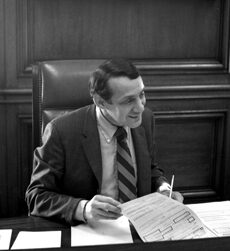
Harvey Milk and Dennis Peron were friends and allies. Milk understood that the fight for LGBTQ+ rights and the fight against cannabis prohibition drew from the same well: the belief that the government does not get to dictate what consenting adults do with their bodies and their lives.
In 1978, Milk personally gathered signatures for Proposition W — a San Francisco ballot measure calling on the state to end cannabis prohibition. The "W" stood for weed. It passed with 56% of the vote.
Three weeks later — on November 27, 1978 — Harvey Milk and Mayor George Moscone were assassinated by former Supervisor Dan White. The man who gathered signatures for the cannabis ballot measure was dead. But the alliance he helped build between gay rights and cannabis reform survived him.
The AIDS Crisis: Cannabis as Medicine
The AIDS crisis transformed cannabis from a recreational substance into a medical necessity in San Francisco. Starting in the early 1980s, thousands of gay men in the city were dying of a disease that the federal government largely ignored. The early antiretroviral drugs caused devastating nausea. Wasting syndrome — the loss of appetite and body weight — was killing patients as surely as the virus itself.
Cannabis worked. It restored appetite. It controlled nausea. It eased pain. It did not cure AIDS, but it kept people alive long enough for better treatments to arrive. And in San Francisco, two people turned that medical reality into a political movement.
Ward 86: The First AIDS Clinic
San Francisco General Hospital opened Ward 86, the first dedicated AIDS clinic in the United States. It was here that Brownie Mary — Mary Jane Rathbun, a 57-year-old waitress — began volunteering. She baked up to 600 cannabis brownies a day and distributed them free to AIDS patients. She paid for the ingredients with her $650 monthly Social Security check.
The hospital named her Volunteer of the Year in 1986. She was not a cannabis activist in any ideological sense. She was a grandmother who saw young men dying and decided to do something about it with the tools she had: an oven, a mixing bowl, and cannabis.
A Meeting at Cafe Flore
Brownie Mary met Dennis Peron at Cafe Flore — a Castro institution — over a joint. The grandmother from the Haight and the gay activist from the Castro discovered they were fighting the same fight. That meeting produced the most consequential partnership in cannabis history: together, they would co-author Proposition 215, the law that changed everything.
Jonathan West: The Personal Cost
In 1990, Dennis Peron was raided again. His partner, Jonathan West, was dying of AIDS. West used cannabis to manage his symptoms — the nausea, the pain, the wasting. He testified in court on Peron's behalf. The charges were dismissed.
Jonathan West died approximately one week later.
West's death crystallized what was already clear: for Peron, the fight for medical cannabis was not abstract politics. It was about the men he loved dying around him, and the one thing that helped them being illegal. The Cannabis Buyers Club, Proposition 215, the entire medical cannabis movement — it grew from this grief.
The Cannabis Buyers Club: Born from AIDS
In 1991, Peron co-founded the San Francisco Cannabis Buyers Club, which grew to serve 8,000+ members at 1444 Market Street — the building that became known as the "Brownie Mary Building." The club was not a recreational cannabis dispensary. It was a medical dispensary, and its patients were overwhelmingly gay men with AIDS.
The Cannabis Buyers Club was the first public medical cannabis dispensary in the United States. Every dispensary in America — in every state — descends from this one. And it was born from the AIDS crisis, in the Castro, run by a gay man, stocked in part with brownies baked by a grandmother who volunteered at the first AIDS clinic in America.
Proposition 215: The Law They Wrote
On November 5, 1996, California voters passed Proposition 215 with 55.6% of the vote, making it the first state to legalize medical cannabis. The law was co-authored by Dennis Peron and Brownie Mary. In 1997, they served as Grand Marshals of the San Francisco Pride Parade — a public declaration that the cannabis movement and the LGBTQ+ movement were, and had always been, the same movement.
The Legacy in Today's San Francisco
The connection between LGBTQ+ identity and cannabis is not just history in San Francisco. It lives in the present:
- Flore (formerly Cafe Flore) — the Castro dispensary and lounge that sits on the same corner where Brownie Mary met Dennis Peron. The name is deliberate. The history is in the walls.
- Eureka Sky — a dispensary in the Castro that carries the neighborhood's legacy forward, serving the same community that Peron fought for.
- The equity program — San Francisco's cannabis equity program prioritizes communities harmed by prohibition. The LGBTQ+ community, the Castro, and the people affected by the AIDS crisis are part of that story.
- Pride events — cannabis brands and dispensaries are a visible presence at San Francisco Pride, maintaining the connection between the two movements.
Walk the Castro. Visit Flore, the dispensary on the corner where Brownie Mary met Dennis Peron. See Eureka Sky. Stand in front of 715 Castro, where Big Top operated. Walk down to 1444 Market Street, the Brownie Mary Building. The history is not in a museum. It is in the streets.
Why This Matters
The cannabis industry in 2026 is a multi-billion-dollar enterprise. It has venture capital, publicly traded companies, and celebrity brands. It is easy to forget that it exists because a gay Vietnam veteran ran a dispensary in the Castro, a grandmother baked brownies for dying men, and a city ravaged by AIDS decided that sick people should not be arrested for finding relief.
When someone buys a legal cannabis product in any state in America, they are benefiting from a right that was won by San Francisco's LGBTQ+ community. The debt is direct. The connection is literal. And in San Francisco, it is still alive.
For in-depth cannabis education, dosing guides, safety information, and research summaries, visit our partner site TryCannabis.org
Related on this site: California Cannabis Law, SF Cannabis Market — 60% Illicit, SF Cannabis Politics.